Ancient Christmas Carols By Linda Kirkpatrick

Ancient Christmas Carols By Linda Kirkpatrick
Ancient Christmas Carols
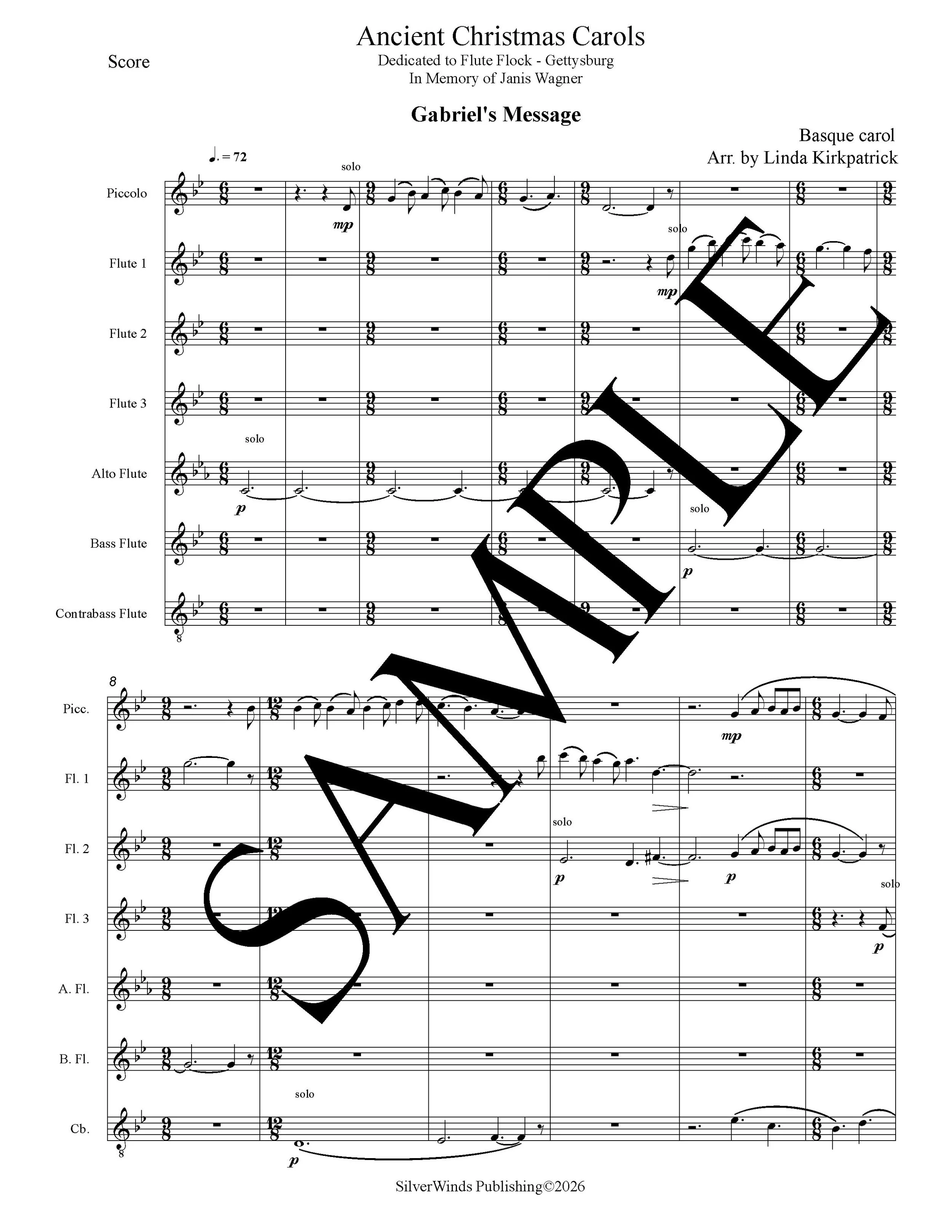
Christmas carols officially emerged in the 14th century, though their roots stretch back to ancient, pre-Christian midwinter festivals. Franciscan friars, inspired by Saint Francis of Assisi, created the earliest Christian carols—originally sung as group circle dances. This collection of carols opens with the well-known Basque folk carol Gabriel’s Message which is based on the 13th century Latin Advent carol Angelus Ad Virginem. The second carol, Normandy Carol, also referred to as the Normandy Tune (traditional French folk melody), dates to the 13th century and originates from Basque country. The tune is often used as an alternate melody to the traditional Christmas hymn Away in the Manger. A “Basque” is a member of an indigenous ethnic group living in the western Pyrenees region of Spain and France.” (Merriam-Webster) The third carol, Branle de l’Official, also known as Ding Dong! Merrily on High (20th century lyrics), was composed in the 16th century by French cleric Jehan Tabourot. Published in 1589 in his dance manual Orchésographie, Tabourot used the pen name Thoinot Arbeau. Seeing as he was a Catholic priest and canon, publishing a manual that focused on social dancing and using his given name would have been frowned upon–he had a reputation to protect!
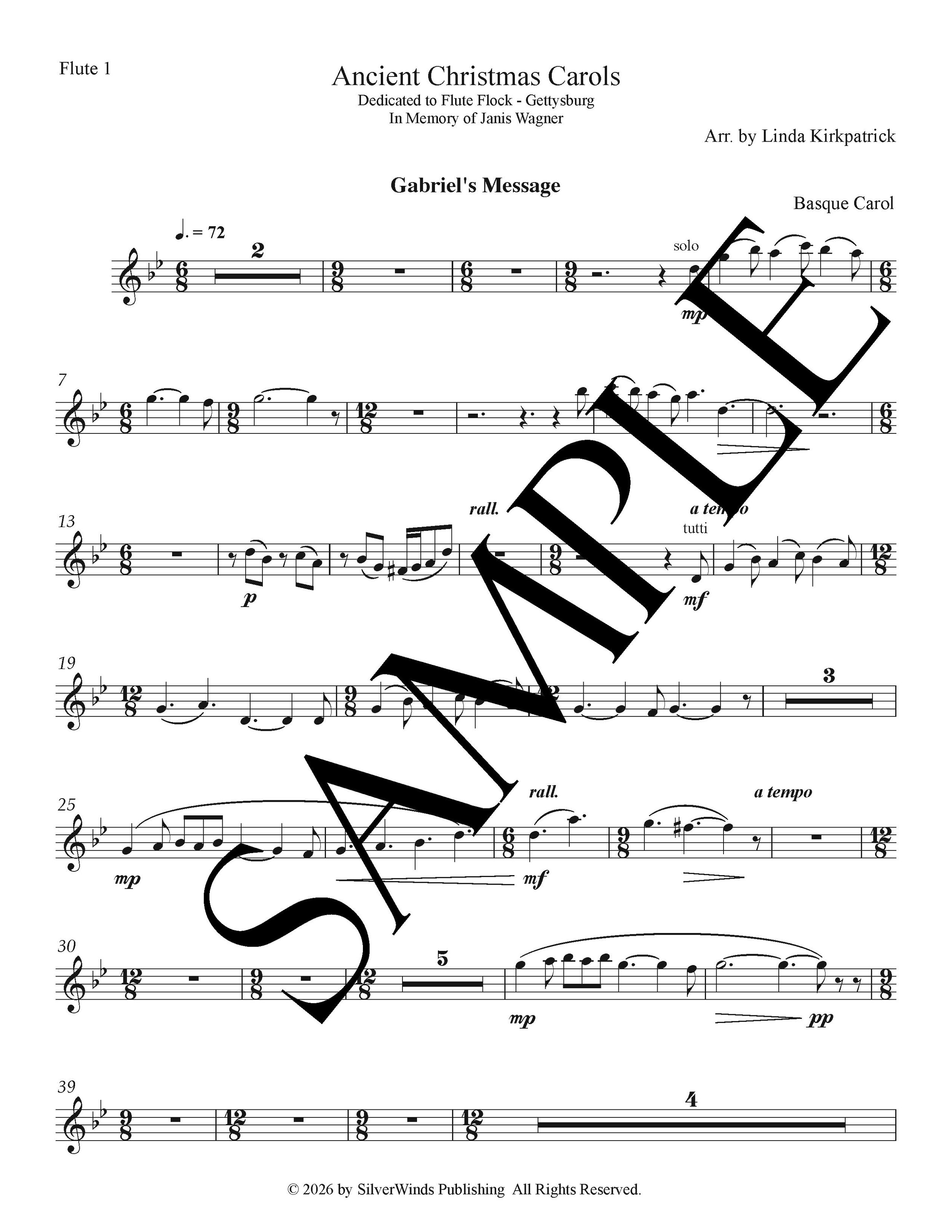
The first two carols showcase the various voices of the flute choir with prominent solo lines and drones. For obvious reasons, the lower octave of the piccolo is seldom heard in ensemble music, including flute choir arrangements. But as a solo voice in combination with alto, bass or contrabass flute, it allows us to hear tone colors seldom used. With the increasing interest in and popularity of lower- voiced flutes, a wider palette of tone color is available, which is necessary when arranging simple melodies such as these. The third carol has dramatic, subito dynamics and specific articulation markings that should be strictly adhered to, avoiding tedium. It includes verses with soloists, a verse with piccolo and C flutes, and a verse featuring alto, bass and contrabass flutes. The articulations are purposefully not always the same between parts in any given section.
I have always been an advocate of the “no vibrato rule” in the flute choir setting. Using vibrato on solos is acceptable if it works within the context and style of the music. All three carols were composed well before flutists started to use vibrato. With that in mind, it is highly recommended that flutists avoid using any vibrato, especially on drones, accompanying material or chords that support melodic lines.
This is a digital version of the piece that you can download as a PDF and print.